Asia Pacific Cultural Center - Constructing a Dream
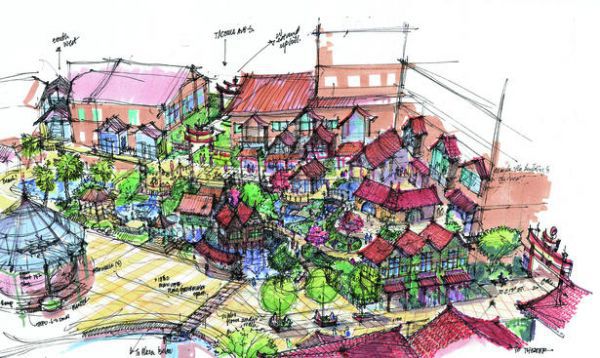
We love the idea of a mixed-use development in downtown Tacoma. Especially one that promises us dim sum and maybe even those little Asian rice crackers. So we’re hoping that the recent talk of the Asia Pacific Cultural Center (APCC) isn’t too good to be true. Yesterday’s City Council Study Session shed more light on the current state of plans, and on the questions still remaining to be answered. Lua Pritchard from the APCC and her coalition presented their hopes for the space and asked for the council to trust them, and hold the land for a year while they answer questions relating to the project. The council, for their part, made certain to explain that these questions do not indicate a lack of support, but a desire to ensure the success of the development.
The proposed development would take up several currently unused city-owned blocks at 21st and Jefferson with a timeline of ground-breaking in 2013 and completion by 2016 at the earliest. The proposal includes plans for retail, dining, apartments for the elderly and students, a cultural center complete with performance and classroom spaces, and of course, parking. Plans call for an Asian grocery store as an anchor tenant have sent the word Uwajimaya buzzing through the grapevine, but it’s too early to say if this is anything more than wishful thinking, and there is a lot still to be decided before the project can become a reality.
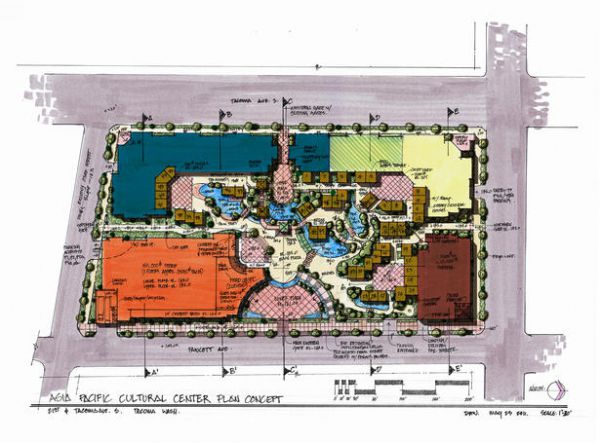
The APCC, assisted by the Seattle Chinatown International District PDA would like for the city to either donate the land outright, or sign a 99-year lease at non-profit rates. They are also asking for technical assistance with the housing and cultural center portions of the project. On its side, the city isn’t about to let the APCC off lightly, and has given the non-profit group a lengthy checklist, which includes the normal kinds of due diligence and pro forma tasks, including market studies and appraisals, financing planning, and reports on city staff and financial resources required, city economic impact and job creation. These last two are items touted by the APCC as major benefits to Tacoma if the development goes ahead. The city is waiting to see what proof they have. We’re waiting for the dim sum.
Also seen at The News Tribune
Filed under: Neighborhoods, Developments, City Projects, Tacoma Nonprofits, Economic Development, Brewery District, 21st & Jefferson, APCC
6 comments
J Jesse October 19, 2011
I see this as a recreation of a Tacoma “Chinatown” – which should have still been there if not for the Tacoma Method.
It’ll be exciting to get something that awesome going in the south end of downtown.
E Elizabeth Burris October 20, 2011
Wow,
This could be wonderful!
I don’t see the harm in giving them a year.. after all the city hasn’t had any offers on the property.
A Akula October 21, 2011
Oh please let this happen, I live just up the street from this and would love to see that pop up in such a good location.
J Jmac October 21, 2011
This is exactly the kind of revitalization this town needs. Hope it works out!
M Mofo from the Hood October 21, 2011
“The APCC, assisted by the Seattle Chinatown International District PDA would like for the city to either donate the land outright, or sign a 99-year lease at non-profit rates.”
—-paragraph 3 from the posting.
For the sake of liberty and justice for all, let’s test the universality of the City of Tacoma diverse and equal philosophy:
“Walmart would like for the city to either donate the land outright, or sign a 99-year lease at non-profit rates.”
J joe-nate October 21, 2011
Great and innovative idea. Given city center location, density should perhaps be increased. Opportunity to create green space in secure environment. Project should have big-business component—helping the larger city through immigrants reach out to prospective overseas Asian trade investors. Business plan must make sense—important as well that commerce there creates some tax revenue. Immigrant communities bring vitality to a city. This property has languished for decades. Key needs are for economic activity and jobs and inclusiveness for people of all ethnic/racial backgrounds in an area meant to celebrate Asian design and tradition. Chinatowns were historically places of segregation and, sometimes, sorrow—this new vision should celebrate diversity and new community-building. Tacoma Nihonmachi’s loss in 1942 ruined the slope, with weeds replacing enterprise. Business leaders in Tacoma should help protect and guide the pilot light of the vision—the model of the relatively new economically vibrant Little Saigon east of Seattle’s Chinatown could be a template. Enterprise matters.