Do We Need to Change the Equation of Who Pays for Transportation Infrastructure?
Something to consider as ballots arrive asking Tacoma voters to consider proposals to raise taxes on themselves to repair and replace our troubled roads, and challenges continue at the state and federal levels around funding needed improvements to transportation infrastructure: Is our current funding structure really the best way of doing things?
In an editorial in New Geography this month, UW Tacoma's Director of Urban Studies, Ali Modarres, asks whether the old (current) “pay as you go” policy of increasing fuel taxes to pay for transportation infrastructure is equitable - and whether it is sustainable.
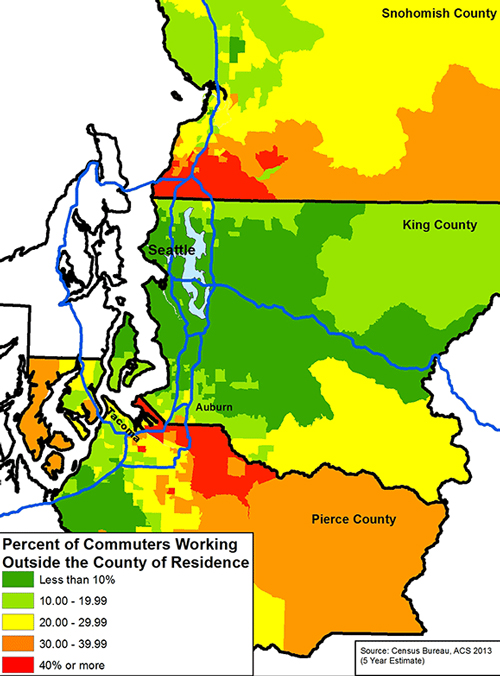
Modarres points to the situation in cities like Seattle and their surrounding regions, where the high cost of living and lack of affordable housing in the city force lower wage workers to seek more affordable housing elsewhere. This makes for a higher cost of transportation - both in terms of time, and in fuel (and fuel taxes) - for those who can least afford it.
In this dynamic low-wage workers end up bearing a large portion of the costs of the roads, while companies benefitting from the flows of people facilitated by transportation infrastructure pay relatively little of the cost of maintaining it.
... a company deciding to locate in Seattle or San Francisco, or any location, does not have to bear the cost their decision imposes on urban transportation and the infrastructure needed to support their operation. Instead it’s their employees, particularly those with lower earning power, who do.
Modarres challenges the fairness of this situation, suggesting that there might be a better solution.
... did the locational choices of employers contribute to the growing commuting problems in the region? If commuters are subjected to “pay as you go” policies, shouldn’t employers who locate in expensive housing markets, irrespective of their employees’ income profile, be subjected to “pay as you locate” policies?
These seem like questions worth asking. Especially if they lead to a more equitable, more sustainable way of funding our transportation infrastructure. What do you think?
Read the full article on "Who Should Pay for the Transportation Infrastructure?" from New Geography.
Filed under: Transportation, City Projects, Transportation Planning
4 comments
J Jesse October 22, 2015
T talus October 23, 2015
J JDHasty October 23, 2015
D Donde November 13, 2015