NWIW Halts Methanol Plant Development in Tacoma
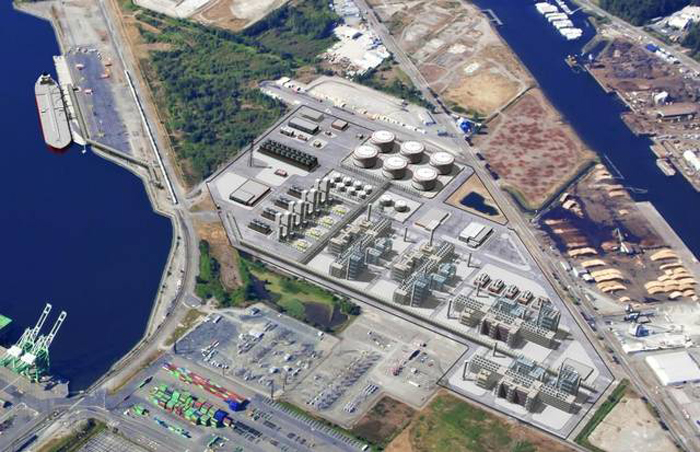
We're just going to leave this press release right here ...
NWIW Ends Development Options at Port of Tacoma
Continues job investment and environmental responsibility at other two sites
TACOMA - Northwest Innovation Works (NWIW) is terminating its lease for a site on the tide flats with the Port of Tacoma. After careful review and evaluation during the pause of the environmental review process, the company met with Port staff to deliver the news this morning.
“While we do not see a way forward with the Port of Tacoma to realize this vision at this location, we remain committed to building facilities that offer a cleaner way to make products necessary for daily life, and to investing billions in local communities in the Pacific Northwest,” said Vee Godley, NWIW President. “We thank the Port of Tacoma Commissioners and staff for their consideration and interest, as well as the many business and community members who demonstrated their support for our project. We also want to thank the people of Tacoma for their consideration of our project.”
NWIW’s decision to terminate the lease centered on the following business considerations particular to the Port of Tacoma site.
The first consideration is associated with the land. While taxpayers have paid tens of millions of dollars to remediate the former smelter site, it remains polluted to this day. Only careful planning, additional research, and the right regulatory approach would allow the development of a heavy industrial use on such a site. Developing that approach has taken longer than anticipated, and the process currently in place to resolve pending questions promises still to be a long one.
Secondly, there is inadequate time to conduct necessary due diligence and environmental analysis. Under the terms of the current lease, NWIW must complete a comprehensive due diligence and environmental review process by April 30. Underlying issues with the former smelter site will require a specific regulatory approach which, though underway, would take significantly more time to fully develop. Those questions, coupled with the robust reviews necessary under the SEPA process, would require several more years of analysis.
“Given what we now know about the site and the process going forward, we estimate that we would need at least three more years of development activities to perform the necessary due diligence, public process, and environmental analysis,” Godley said. NWIW had been prepared to spend tens of millions of dollars to identify and analyze the potential environmental impacts of the proposed facility and their responsible mitigation.
“Accountability and transparency are important,” said Godley. “Given sufficient time, we believe we would have been able to satisfy most of the local citizens’ concerns and questions through the public participation process, and correct a lot of the misinformation swirling about regarding potential impacts of our project.” NWIW cited public concerns when asking for a pause in the environmental review process.
Finally, the site at the Port of Tacoma is zoned for this type of proposed business, and NWIW has not asked for variances to this. However, various proposals to change the regulatory requirements for this site have injected additional risk into the process.
NWIW is developing the same type of production facility in Kalama, Wash. as was proposed in Tacoma. NWIW has announced its decision to use Ultra-Low Emissions (ULE) reforming technology as part of its ongoing commitment to be the most environmentally responsible methanol producer in the world. “Kalama’s Draft Environmental Impact Statement (DEIS) demonstrates the clear improvement our technology selection makes in reducing carbon emissions and provides much of the empirical data and analysis that many project opponents have demanded,” said Godley.
“On behalf of NWIW, I want to extend special thanks to the women and men in the local building trades, and the business leaders who have shared our vision for a safe, environmentally responsible industrial future for our region,” said Godley. “We look forward to working with them on our other projects.”
The company remains committed to development of sites in Kalama and St. Helens, Ore., and to the environmental and economic benefits they represent regionally and globally.
So, what is the future of Tacoma's industrial port properties?
10 comments
S Save Tacoma Water April 19, 2016
J Jeff Richardson April 20, 2016
T talus April 20, 2016
J Jesse April 20, 2016
H honeydew slausen April 20, 2016
L LeftyBender April 21, 2016
P Published Author RR Anderson April 21, 2016
R RHTCCComedyfan April 22, 2016
R RW May 2, 2016
J Joe-Nate April 28, 2016