On a Small Tacoma Bookshelf
On several occasions I’ve heard Michael Sullivan of Tacoma’s Artifacts Consulting declare, “this is a book that should be on your Tacoma bookshelf.” He would then piece together a marvelous tale that bridges the gap between some literary work and the buildings we pass every day. I began to lose track of all the books I was supposed to have read and decided to ask for an official list. My email was quite short. Michael’s answer was quite detailed and needs to be shared.
“If you only had a small shelf on which to keep a library of books on Tacoma what would you choose? My tastes tend to wander from the conventional works of history and memoir into the realm of fiction, pop culture and the simply odd artifact. With a few words of explanation and intellectual defense here are my choices. I was trying for a clean list of 10 but …”
History of Tacoma
by Herbert Hunt
Published in 1916 by The S.J,. Clark Publishing Co.
This rare three volume set is far from fluid or well written but it is an amazingly detailed account of Tacoma and the surrounds up until the First World War. Hunt was a newspaperman and it’s obvious that he painstakingly dug thru decades of daily newspapers to paste together this detailed but jumbled scrapbook of early Tacoma. Hunt’s Tacoma, along with another heavy, leather bound three volume set called Washington, West of the Cascades, were subscription histories with one volume dedicated to glowing biographies of the book’s sponsors.

The Maltese Falcon
by Dashall Hammet
 |
Tacoma became a favorite setting for detective fiction in the late 20’s and continued to serve as a backdrop for gumshoe noir well past the Second World War. The quintessential appearance came in Chapter 7 of Hammet’s Maltese Falcon where an existential episode involving a stranger crushed on the street by a falling construction beam recalls the author’s memories of Tacoma. Hammet used Tacoma in several of his books and stories as did Raymond Chandler, Erle Stanley Gardner, James Cain and Earl Derr Biggers. |
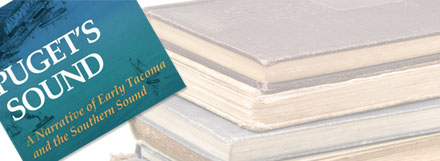
Puget’s Sound
by Murray Morgan
Published by University of Washington Press
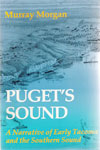 |
This is far and away the most readable history of early Tacoma by its most notable author and historian. Morgan covers the same timeframe as Hunt but he adds a journalist sense of character, atmosphere and humor. If you have only one book on Tacoma this is the one. Morgan ‘s other books on Tacoma include an illustrated scrapbook called South on the Sound with wife Rosa and The Mill on the Boot about the tide flats sawmill turned industrial landmark. |
The Mountain That Was God: Being a Little Book About the Great Peak Which the Indians Named “Tacoma” But Which Is Officially Called “Rainier”
by John H. Williams
1910 & 1911
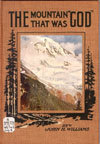 |
This is an odd, collectible book that was published in several different editions during the fierce fight between Tacoma and Seattle over the name of Mt. Tacoma/Mt. Rainier. In a match between the two cities Tacoma appeared to play the trump card by evoking no less than god on the side of naming the mountain Tacoma. In the end the decision was to keep it Mt. Rainier but this beautifully illustrated, poetic and ultimately perplexing volume remains the best souvenir of the 1910 debate. The rarest edition is bound in calf leather with gold embossing and edges. Heavenly indeed. |
The Canoe and the Saddle
by Theodore Winthrop
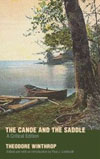 |
This travelogue of pre civil war Tacoma surrounds became a best seller when its author Theodore Winthop, became celebrated as the first Union soldier killed in the Civil War. It’s a bit of a stylistic slog to read but there is a certain charm to the way a young man on an adventure viewed Puget Sound in the days before railroads, Indian wars and even cities. Winthrop’s book was the source for Tacoma’s name since he was also the first to cite the native title for the mountain as Tacoma. The book has been reprinted several times and first editions are among the rarest of Tacoma books. |
Green Timber
by Thomas Emerson Ripley
Published in 1968 by American West Publishing and the Washington State Historical Society
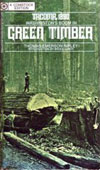 |
This very readable but somewhat self congratulatory account of Tacoma at the end of the 19th century captures the heady times when the transcontinental railroad seemed to exist solely to bring people and excitement to the city. The book is rich in the details of a place Rudyard Kipling characterized as being in the middle of a “Boom of the Boomiest”. You can imaging the author Ripley sitting next to Kipling on the broad veranda of the Tacoma Hotel sipping whiskey and waiting for Mark Twain to join them. BTW Kipling’s book with his observations on Tacoma is called From Sea to Sea published in 1899. |
Murder of a City
Jon Gold (Fred Crisman)
Self published in 1970 by Transistor Publishing Company
This weird, politically slanted rant about Tacoma in the late 1960’s is a window into the chaos and bitterness that led to the 1971 recall of a majority of the City Council and the fall of Mayor R.L. Slim Rasmussen. The author, Fred Chrisman, was a talk radio personality who manages in the book to tie corruption in Tacoma to everything from communist infiltrators to the Kennedy assassination. The paranoid tone of the writing, shameless personal attacks, and naming of names seems like something out of the mid 50’s but as a historical artifact is much more than just a novelty.
The Working Longshoreman / The Working Waterfront
by Ronald Magden
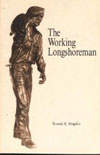 |
Its easy today to overlook the fact that Tacoma is first of all a seaport. Ron Magden’s books trace the birth of the city on one of the west coast’s best natural harbors and celebrate the lives and events that have unfolded along our hard working shores. These books capture the rough romanticism of the early waterfront and the labor disputes that grew out of the expanded port area, a setting that was used as an inspiration for Elia Kazan’s 1954 film On the Waterfront with Marlon Brando (Brando returned during Bolt Decision era and was arrested and jailed along with Puyallup fishing rights activists). |
Devil in the White City
by Eric Larson
Published in 2004 by Crown Books
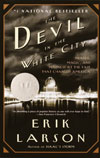 |
This very recent best seller tells the story of Daniel Burnham and Frederick Law Olmstead’s building of the Chicago world’s fair in 1892-3. Chicago has always been the city that most influenced Tacoma architecturally, economically and politically. This book takes you into the creative minds of two brilliant urban designers, both of which left important marks on Tacoma before and after the great Columbian Exposition. Olmstead created the first master plan for Tacoma and Burnham is often cited as the inventor of the skyscraper. |
Tacoma was born of railroad engineering and most of its great civic accomplishments and pratfalls are connected to feats of engineering and ambitions of constructed grandeur. The best narratives about building the city and its reach are:
Rails to Paradise
by Russell Holter and Jesse McAbee
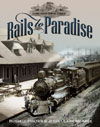 |
This newly published history of the Tacoma Eastern Railroad tells the story building a railroad to Mt. Tacoma/Rainier. As Quixotic civic endeavors go Tacoma joined the big leagues with this high adventure and this thich richly illustrated tome captures all the high and low points. |
Bridging the Narrows
by Joe Gotchy
Not as good as the film but the story of Galloping Gerty as told by a guy who helped build the bridge and then witness its calamitous end is a great read, even though we all know the ending.
The Tacoma Public Utilities Story
by John Ott & Dick Malloy
Factual, and just about exactly what you would expect from a bunch of engineers excited about really big toys but when you add it all up the City has built some pretty cool stuff. The text is clear and direct but the photos are one marvel after another.
Washington, A Guide to the Evergreen State
1940. Federal Writers Project
Because anybody with a bookshelf dedicated to anywhere in Washington should have this book. The Tacoma section is colorfully written and the various tours take you back to the days before interstate highways. For those of us who believe that the single greatest injustice done to Tacoma was the construction of I-5 along the most unfortunate, ugliest route through the city possible. The Washington guide captures the short time between the death of the railroads and the blandness of the freeways and it was published by the Washington State Historical Society here in Tacoma.
Michael Sullivan is a principal in Artifacts Consulting Inc, a Tacoma-based architectural conservation/ historic preservation studio. He is also an adjunct faculty member at the University of Washington -Tacoma and the UW School of Architecture, teaching courses in Northwest history, urban studies and historic preservation practices.