The Trouble With Measuring Economic Development Program Impacts
A recent report from the Washington State Auditor's office took a look at performance measures in economic development programs... and found them lacking.
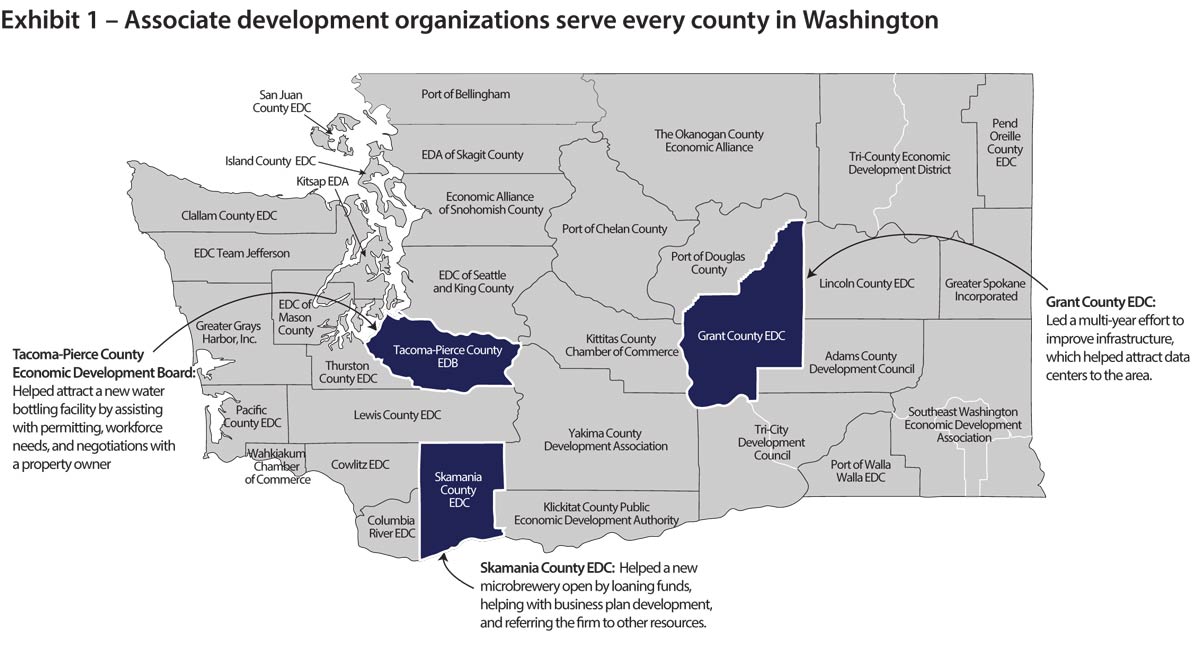
The report focused mostly on Washington State's Associate Development Organization program, which provides a variety of economic development services tailored to local needs across the state in the form of $3 million in grants annually. The Tacoma-Pierce County Economic Development Board is one of those local recipients of ADO funding.
Currently the programs set goals every two years, and report to the State on six measures, including employment and economic information for the area, compared to the previous year's information, and the "impact on employment" of their programs.
According to the auditor's report, however, it is difficult to identify a direct connection between economic development activities and employment growth.
We found it is virtually impossible to measure the impact of ADO services, because it is diffi cult to isolate them from the eff ects of other economic development partners and the factors business owners consider when deciding to expand or relocate. Factors beyond the control of economic developers – such as the availability of loans, company sales, inflation rates, and the price of raw materials – all play into business decisions to relocate, expand, or invest capital.
Putting it bluntly, the report finds "Commerce cannot measure ADO impact," and that "Measuring ADO impacts scientifically is virtually impossible." Now that's not to say that the programs have no impact. What it does say, though, is that the State currently has no way of assessing how much, or how little, the program does for economic development. It is difficult, the report says, to separate the impact of the program from what was happening already in the economy - for better or for worse.
The report recommends shifting program goals from numbers of jobs created to other measures of quality and efficiency, such as number and percent of clients receiving ADO services that open a new business or expand an existing business. Clarifying program goals in this way, while also aligning reporting and other requirements with leading practices, according to the report, should lead to more meaningful measurements of performance.
Hard numerical targets, the report suggests, are not the best measure of performance, but rather more qualitative goals that can include service quality, efficiency, intermediate and end outcomes. These kinds of goals could more clearly capture the impact of program activities, including longer-term investments in capacity building and planning.
Measuring the effectiveness of economic development programs is a tricky thing to do at every level.
Locally, we have the Tacoma-Pierce County Economic Development Board and various economic development functions at the city and county level. The challenge is proving the connections between these efforts and actual outcomes. So, how do we measure the 'economic development' success of these programs? Does it matter?
The full report from the State Auditor is available here.
Filed under: Economic Development, Washington State