3 Endangered Clouded Leopard Cubs Born at Point Defiance Zoo & Aquarium
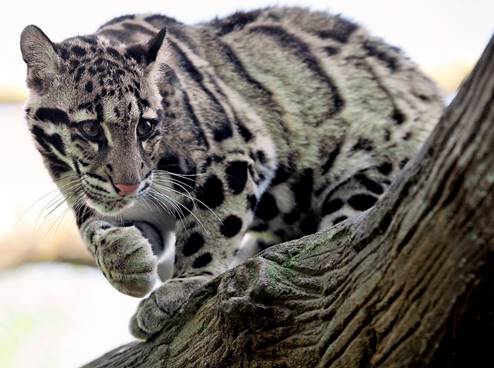
TACOMA, Wash. – An endangered clouded leopard gave birth to three healthy cubs at Point Defiance Zoo & Aquarium late Wednesday.
“The birth of these cubs is another crucial step in increasing the number of clouded leopards in the Species Survival Plan®,” Zoo General Curator Karen Goodrowe Beck said.
“We are especially pleased because this particular pairing brings new genetic vitality to the clouded leopards in the managed breeding program for this species,” she added.
The cubs are being bottle-fed and will be hand-reared by zoo staff with extensive experience in the care of clouded leopards and other exotic cats.
This is routine for the species and has produced the best results in terms of health and well-being of clouded leopard cubs, Goodrowe Beck said.
Sang Dao, 3, came to Point Defiance Zoo & Aquarium three years ago from Tanganyika Wildlife Park near Wichita, Kansas.
She was mated with Tien, also 3. He was born at Point Defiance Zoo in 2013.
They are first time parents.
The species is under significant pressure in the wild from human encroachment and destruction of its habitat, as well as poaching. The cats, which live in the forests and trees of Southeast Asia, are elusive, and it’s difficult to know how many remain in the wild.
The cubs are not yet named. The zoo will announce in a few weeks how and when they will be named and when visitors will be able to see them.
Sang Dao is now the first-time mother of three cubs.
“These cats are very rare,” Goodrowe Beck said. “We hope visitors to the zoo will connect with them and be inspired to take action to help save their species in the wild.”
Point Defiance Zoo & Aquarium long has been a leader in clouded leopard conservation. Both Goodrowe Beck and zookeeper Andy Goldfarb, supported by The Zoo Society’s Dr. Holly Reed Wildlife Conservation Fund, have worked with zookeepers in Thailand on improving ways to breed and rear clouded leopards. Goodrowe Beck holds a Ph.D. in reproductive biology.
Having a robust population of clouded leopards in zoos allows scientists to study the species’ behavior, physiology and medical conditions. That’s not possible in the wild, Goodrowe Beck said. But the information gained may one day help scientists develop conservation strategies for helping the species in the wild.
Maintaining clouded leopard populations in zoos allows animals like Sang Dao and Tien – and their cubs – to inspire people to take action on behalf of wildlife and wild places.
The zoo’s Paws for the Cause program, for example, helps consumers understand the link between some foods they eat and products they use and the deforestation of animal habitat half a world away. The program also provides shoppers with tips on choosing products with deforestation-free palm oil and ways to get engaged by urging companies to make wildlife friendly choices in the raw materials they buy. Palm oil, used in a wide variety of goods from candy to shampoo and body lotion to laundry soap, is derived from the oil palm tree. And some palm oil production results in wholesale destruction of the habitat on which clouded leopards, orangutans, tigers, tapirs and other animals depend.
To learn more about this and how to take action, go to www.pdza.org/pawsforthecause. To learn more about clouded leopards, go to www.pdza.org/clouded-leopard and www.cloudedleopard.org
Tacoma zookeepers founded the nonprofit Clouded Leopard Project 15 years ago (www.cloudedleopard.org). The group works closely with the zoo and The Zoo Society in fundraising efforts for conservation projects.