Endangered Oregon Spotted Frogs Released into Pierce County Wetlands
Through cooperative, multy-agency program to save the amphibians
EATONVILLE, Wash. – More than 150 Oregon spotted frogs slid quietly into marshy, Pierce County wetlands Thursday morning, some quickly swimming away, others adjusting a bit to their new environment before hopping along on the native grasses.
The frogs didn’t make a lot of noise as they began adapting to their new home, but there were broad smiles, high-fives and murmurs of “Congratulations!” among the two-dozen humans gathered for the occasion.
Rearing this group of Oregon spotted frogs and releasing them into the wild was a cooperative effort of Northwest Trek Wildlife Park, the Washington Department of Fish & Wildlife, the Sustainability in Prisons Project, and other zoos and state and federal agencies.
The little amphibians are endangered in Washington state and considered a threatened species by the U.S. Department of Fish and Wildlife under the Endangered Species Act.
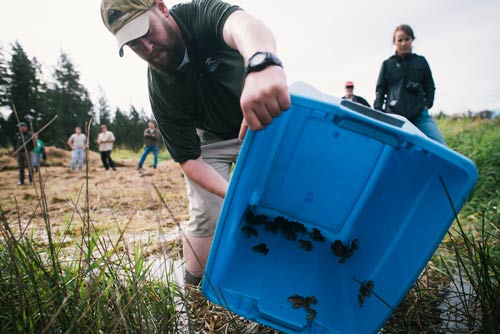 Thursday morning, 153 of the juvenile frogs reared at Northwest Trek Wildlife Park and the Cedar Creek Correctional Center in Littlerock were released into a Pierce County wetland under blue skies.
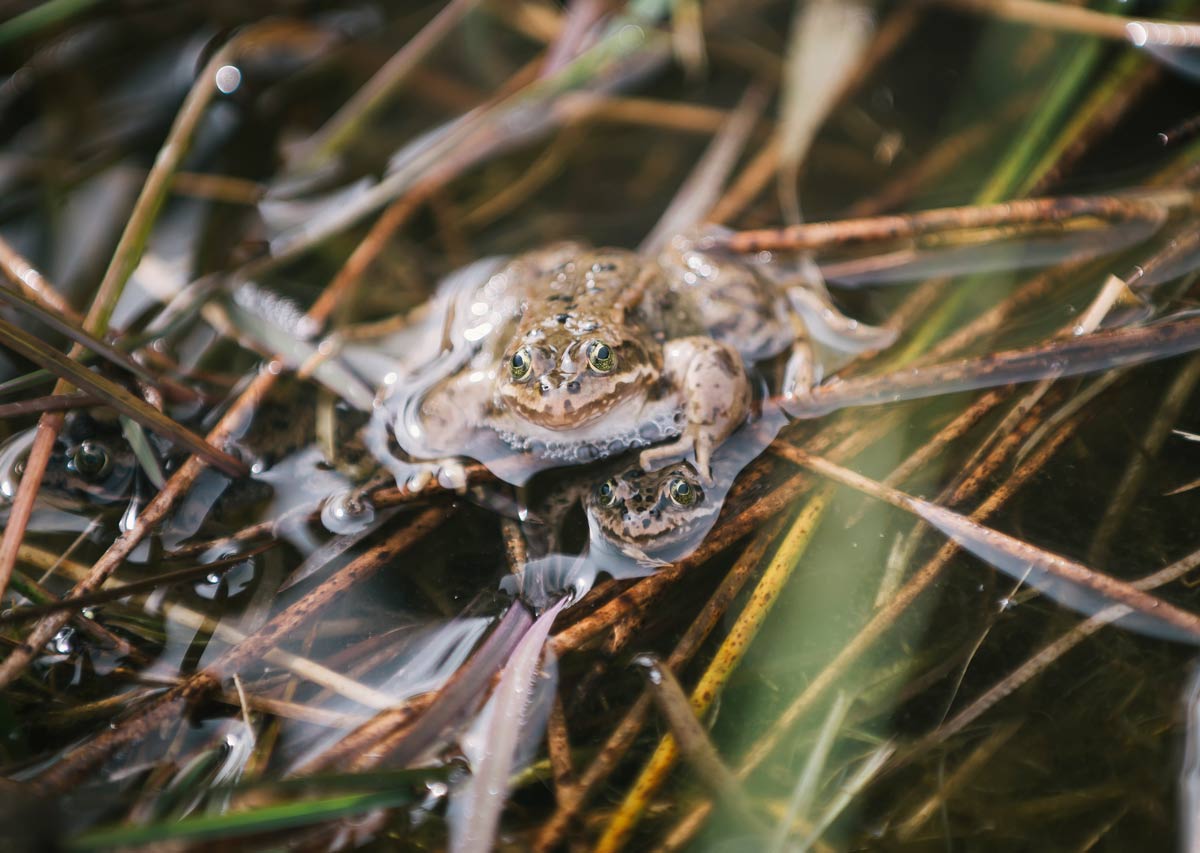
The dark green and mottled amphibians with chartreuse-colored eyes appeared almost to sense their release, many of them hopping up and down in see-through plastic containers as they were carried gingerly over swamp grass to muddy wet pools, where the men and women who had carefully reared them prepared to let them go.
Raising the frogs from eggs through the tadpole state and into juvenile status gives them a head start for a better chance at survival when they’re released into the wild, said Dave Meadows, an animal keeper who helps oversee the program at Northwest Trek.
The precious eggs were collected from wetlands by Washington Department of Fish and Wildlife biologists for the program, which aims to increase the native populations of the frogs.
Rearing, or “head-starting,” the frogs in a controlled environment gives them a chance to grow without threat from predators until they’re better able to survive.
“Oregon spotted frogs play a crucial role in the wetlands ecosystem,” Meadows said. “We enjoy raising them, knowing that their release into the wild is helping reestablish populations of a species that’s been rapidly declining in numbers.”
They are very aquatic animals with upturned eyes and intricately webbed feet.
Washington declared the Oregon spotted frog an endangered species in 1997. It historically ranged from southwestern British Columbia to northeastern California. However, scientists have seen populations plummet, driving the frog toward extinction.
The native amphibian has lost ground to habitat loss from draining and development, disease and the introduction of invasive species such as the American bullfrog.
This is the sixth year “head-started” frogs have been released through the collaborative program. More than 5,000 frogs have been released since the program began.
“It takes a great deal of effort to get a population growing,” said Lisa Hallock, Wildlife Biologist for the Washington Department of Fish and Wildlife. “We want to make sure that we do all we can to reestablish these frogs in the wild.”
Since its inception in 2007, a number of zoos, state and federal agencies have played roles in the Oregon Spotted Frog Recovery Program. They have included the Washington Department of Fish and Wildlife; Northwest Trek Wildlife Park; Woodland Park Zoo; Oregon Zoo; Point Defiance Zoo & Aquarium; the Sustainability in Prisons Project, a partnership between the Washington Department of Corrections and The Evergreen State College; the Washington State Department of Transportation; U.S. Fish and Wildlife Service; Port Blakely Tree Farms; Washington Department of Natural Resources; U.S Geological Survey; Mountain View Conservation & Breeding Centre; and The Nature Conservancy.
In 2012, Northwest Trek Wildlife Park, Woodland Park Zoo and Oregon Zoo received the prestigious North American Conservation Award from the Association of Zoos & Aquariums for their participation in the Oregon spotted frog project.
Photo 1: Two juvenile Oregon spotted frogs get accustomed to their new home, shortly after their release into a Pierce County wetland on Thursday morning.
Photo 2: A Northwest Trek Wildlife Park staff member gently releases juvenile Oregon spotted frogs into a Pierce County wetland Thursday morning. The frogs were reared, or “head-started,” by staff at the wildlife park. Growing the frogs from eggs in a controlled environment allows them to mature without threat of predators, giving these amphibians, whose species is endangered, a better chance at survival in the wild.
Photo credits: Ingrid Barrentine/Northwest Trek Wildlife Park