“NeuroTribes”: The Past and Future of Autism Best-selling Author Steve Silberman Gives a Public Talk
Keck Neuroscience Lecture: 6 p.m. Thursday, March 24
PLUS: Neuroscience research public showcase
4–5:45 p.m. Monday, Feb. 22
TACOMA, Wash. – “What is autism? A lifelong disability or a naturally occurring form of cognitive difference akin to certain forms of genius?”
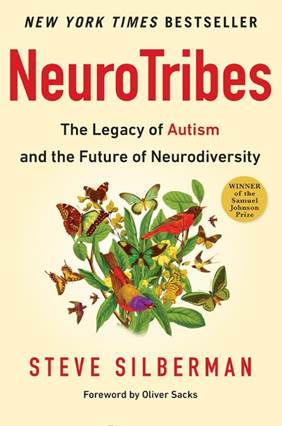
Thus begins the publicity note for the 2015 book, NeuroTribes: The Legacy of Autism and the Future of Neurodiversity, by science writer Steve Silberman. The book became an intercontinental best-seller and made the “Best Books of 2015” list of The New York Times, The Economist, Financial Times, The Boston Globe, and other publications.
On March 24 Tacoma audiences can hear from Silberman about NeuroTribes, and learn about the growing movement of “neurodiversity” activists, who see autism as a natural and celebrated human difference—a disability, rather than a disease or disorder of modern times.
Silberman will deliver the Keck Neuroscience Lecture on Thursday, March 24, from 6 p.m. to 7:30 p.m., including time for questions from the audience. The free event will be in the Tahoma Room, Commencement Hall. No tickets are required, and everyone is welcome. A map of campus is below.
Silberman’s March lecture will reveal some of the secret history of autism, which he says was long suppressed by the same clinicians who became famous for discovering it. The WIRED magazine reporter also will give his assessment of why the number of diagnoses of autism has soared in recent years.
Silberman’s book, which won the 2015 Samuel Johnson Prize for Non-Fiction, uncovers the story of Hans Asperger, whose “little professors” were targeted by Nazi social engineers. It claims to expose a covert campaign by child psychiatrist Leo Kanner to suppress knowledge of the autism spectrum for 50 years, and it spotlights a new movement of activists who seek respect, workplace and educational accommodations, and the right to self-determination for those with cognitive differences.
The San Francisco Chronicle said of the book: “To read NeuroTribes is to realize how much autistic people have enriched the scope of human knowledge and diversity, and how impoverished the world would be without them.”
“Epic and often shocking,” wrote the Chicago Tribune. “A rallying call to respect difference,” said Science magazine.
Steve Silberman is an award-winning science writer, whose articles have appeared in WIRED, The New Yorker, Nature, Salon, and many other publications. Silberman’s TED talk, “The Forgotten History of Autism,” has been viewed more than a million times and translated into 25 languages. His article, “The Placebo Problem,” won the 2010 Science Journalism Award for magazine writing from the American Association for the Advancement of Science and was featured on The Colbert Report. His writing on science, culture, and literature has appeared in major anthologies, including The Best American Science Writing and The Best Business Stories of the Year.
The lecture is made possible by the W.M. Keck Foundation, which supported the creation of University of Puget Sound’s Keck Initiative for NeuroCulture. The campus initiative aims to broaden knowledge about neuroscience through research and interdisciplinary study opportunities, and public seminars and exhibitions.
For directions and a map of the University of Puget Sound campus: pugetsound.edu/directions
For accessibility information please contact accessibility@pugetsound.edu or 253.879.3236, or visit pugetsound.edu/accessibility.