September Crafts of the Past at Fort Nisqually
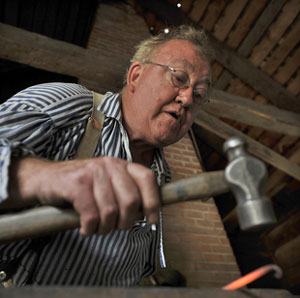
September is the last month for Fort Nisqually Living History Museum visitors to get a close encounter with the creativity of daily life in the 1800s during the popular Crafts of the Past program.
Each weekend a different artist is “in-residence” at the Fort, demonstrating and displaying their work. Most will also offer guests the opportunity to try the craft themselves.
Crafts featured in September include bonnet making, tin whistles, and cyanotypes.
“Many of the things people needed for daily life in the 1800s — from what they wore to the tools they used — were produced by crafts people whose work was both functional and beautiful,” said Fort Nisqually’s site manager Mike McGuire. “This is a chance to see artists in action and learn directly from them.”
Crafts of the Past is sponsored by the Fort Nisqually Foundation and made possible by Tribe and Tacoma Arts Commission. It is free with paid admission.
For more information, visit FortNisually.org or call (253) 591-5339.
Artisans for September:
September 6 and 7
Millinery
Dana Repp
Repp makes period replica bonnets based on examples in museum collections, period illustrations, and photographs.
During the weekend, she will display examples of the various types of bonnets worn during the 19th century and demonstrate various construction methods.
There will be corded and slatted bonnets, which were worn in the summer for sun protection, as well as straw bonnets, whose durability and affordability eventually made them popular year round. Quilted or wadded, wool or silk bonnets were used for warmth in the winter.
Some silk bonnets were solely for showing off, providing little protection from the elements but adding a splash of color and style to a woman’s wardrobe.
Guests will have the opportunity to make slat bonnets in miniature.
September 14 (Sunday Only)
Tin Whistles
Steve Ricketts
Music has long been a part of Rickets life. He learned to play the clarinet in his youth and as adult played saxophone in the Port Townsend Community Orchestra for 27 years.
When Rickets began volunteering as a re-enactor at Fort Nisqually 20 years ago, he took up the tin whistle, an instrument documented in the Fort’s records.
During the weekend, Rickets will demonstrate the tin whistle and similar instruments such as the Flageolette and Recorder, and explain their similarities and differences.
People who bring their own tin whistles will get a primer on how to play. (Whistles can be purchased in the Museum Store)
September 20 and 21
Cyanotypes
Victoria Anderson
Anderson had her first experience with making a cyanotype photographic print as a child with a kit she got from a science store.
As a college student, Victoria explored the process more deeply, learning to make her own photo-sensitive paper and fabric. Cyanotypes use ultraviolet light (e.g. sunlight) to create a photographic image, and were one of the earliest forms of photography to appear in the mid-1800s.
It was quickly utilized to make images of plant specimens. Guests will have the opportunity to make their own prints of leaves, buttons, or lace.
September 27 (Saturday only)
Gardening Crafts in the Heritage Gardens
Members of the Fort Nisqually Gardening Guild will demonstrate traditional garden crafts such as making wattle fencing, hurdles, and cloches.
The craft demonstration complements the Fall Garden Festival, based at the Point Defiance Pagoda. The Fort Nisqually Heritage Gardens are featured in the Fall Garden Festival tours.
This time of year, the gardens at Fort Nisqually are giving up a cornucopia of delicious fruits and vegetables. Plums and apples are ripening on the trees. Wheat and barley were recently harvested.
The heritage gardens represent the Fort’s original 1850s gardens. The historic gardens were much larger -- approximately one-and-a-half acres.
The Hudson’s Bay Company trading post grew as much of their own food as possible. In 1839, anticipating the decline of the local fur trade, HBC formed the Puget Sound Agricultural Company (PSAC), based at Fort Nisqually.
By the mid 1850's HBC had laid claim to over 160,000 acres of land in south Puget Sound, most of it used for the raising of sheep, cattle, and horses.
For more on the Fall Garden Festival visitmetroparkstacoma.org/fallgardenfest
Free Admission September 27:
Admission to Fort Nisqually is free on Sept. 27 for Tacoma residents (proof of residency required) and for Smithsonian Magazine ticket holders. To download free tickets from Smithsonian Magazine’s
Museum Day Live! CLICK HERE.