Volunteers needed to safeguard your favorite Metro Parks site
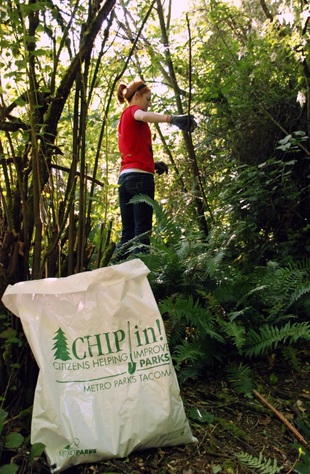
New “Friends” sought for Titlow, Swan Creek and parks in your neighborhood
Metro Parks’ Titlow Park offers something for just about everybody: a saltwater beach, a boat launch, an historic lodge, a playground, picnic areas, wooded trails, a pocket estuary, and tennis and basketball courts.
In the summer, Titlow hosts kids’ day camps. When it’s hot, parents and toddlers trek to its spraygrounds. Throughout the year, Titlow’s lodge attracts weddings, receptions and conferences.
There’s no doubt that 75-acre Titlow, where the west end of Sixth Avenue meets Puget Sound, is also among the city’s favorite recreation destinations.
Even so, Titlow needs friends. Friends as in “Friends of Titlow Park.” Despite its popularity, Titlow lacks a dedicated group of year-round volunteers. That is, people who donate time and labor to help restore and conserve Titlow’s dozens of acres of woodlands. And, people willing to patrol the park as lookouts and alert authorities to vandalism or hazards.
Whether you live near Titlow or across town, if this – or another park – is your favorite, why not join the Citizens Helping Improve Parks (CHIP-in!) team? Habitat stewards such as Albert Styers, who is devoted to South Tacoma’s Oak Tree Park, gets immense satisfaction from his volunteer work, he says.
At Titlow, several years of intermittent volunteer contributions by community, school, business and employee groups organized through CHIP-in! have made a big difference. Along Sixth Avenue, volunteers have removed invasive plants – Himalayan blackberries, English ivy and holly – and planted native evergreens to add native variety to the woods uphill from the shoreline.
A more substantial, consistent volunteer commitment is needed, said Metro Parks’ Richard Madison, who coordinates the CHIP-in! program. “It’s an ongoing thing. We’re starting to see invasive plants creep back in. We would hate to lose what we’ve been able to accomplish there.”
Madison would love to see a neighborhood group rally around Titlow, to both report safety concerns and maintain trails and wooded areas. “It’s an amazing park. There’s more to it than just manicured grass and picnic tables. There’s a trail system, the beach, lagoons, amazing habitats. It’s one of the most diverse parks we have,” Madison said.
And it’s not the only park that would benefit greatly from an infusion of dedicated volunteers. For example, the sheer size of Swan Creek Park, on the other side of Tacoma, with 290 acres controlled by Metro Parks, poses a huge maintenance and oversight challenge, Madison said. “The more eyes and ears, the better,” he said.
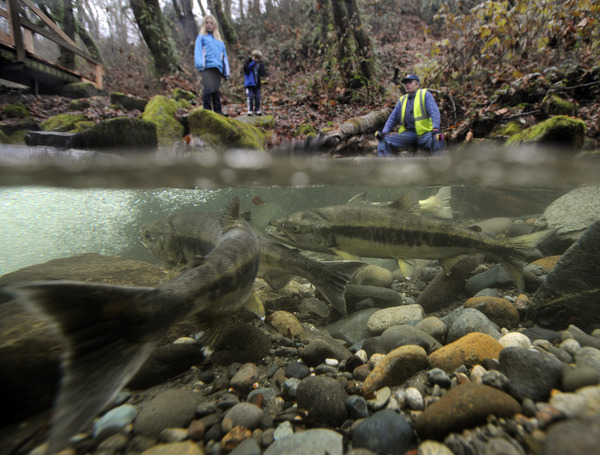
Chum salmon spawn in the park’s namesake creek, which runs through a wooded canyon accessible on pedestrian trails. Swan Creek also boasts the city’s largest community garden, a one-acre permaculture patch or food forest, and a 50-acre mountain-bike system, which is about to become more complex.
Volunteers are invited to engage in any of those ongoing projects, Madison said, and are especially needed to restore and maintain pedestrian trails and to eradicate a heavy infestation of English ivy east of East 56th Street, one of the park’s primary access points.
These aren’t the only parks that stand to benefit from long-term volunteer commitment. They include in Tacoma’s central area, China Lake and DeLong parks. Both are largely undeveloped, with trails and vital wetlands. “It’s nature’s filtration system,” Madison said.