Who Will Win the White House? Six Lectures at University of Puget Sound in 2016
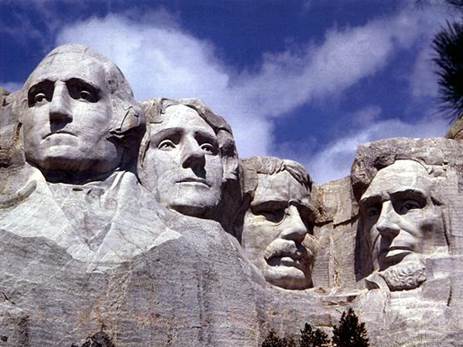
Political scientist Michael Artime and historian Mike Purdy ’76 analyze the 2016 presidential campaign and offer historical insights Jan. 21—April 28, monthly on a Thursday, at 7 p.m.
TACOMA, Wash. – “What do you think? Who will win the White House?” asks every caring American. And from the curious and the cynical comes that other question: “And exactly how will he or she win?”
Whether you are a reformer, a sceptic, or a concerned citizen, to learn more about how your elected leader gets to the top of American politics, come to the free six-lecture series “Who Will Win the White House,” running Jan. 21–April 28, 2016, at University of Puget Sound.
Political scientist Michael Artime and presidential historian Mike Purdy ’76, M.B.A.’79 will provide a vigorous analysis of the 2016 campaign and some historical insights to put today’s news into perspective. They will lay out the hot-button issues in the current contest, and share some of the colorful and surprising stories that lay behind two centuries of presidential elections—ever since George Washington was unanimously elected in 1789.
The six free lectures will take place 7–8:30 p.m., on Thursdays, at the dates listed below, in McIntyre Hall, Room 103, situated on Jones Circle on the university campus. The one-hour presentations will be followed by half-hour Q&A sessions, allowing attendees to learn more and share their own views.
“We could see a brokered Republican Convention in 2016, and that’s something we’ve not had since 1952,” says Purdy, an independent presidential historian, consultant, author, and Puget Sound alum. “Normally the convention is just pageantry, with the candidate already selected, but this time delegates could be free to vote as they wish on the second round, which will mean some real horse-brokering going on. At this point it’s really a very fluid situation.”
This dramatic possibility, arising because there is no clear Republican front-runner with a sustained majority in the polls, will be discussed in the first lecture, “The Long Road to 1600 Pennsylvania Avenue,” on Thursday, Jan. 21, at 7 p.m.
In the talk Michael Artime, adjunct professor at Puget Sound and Tacoma Community College, and Purdy will also discuss the controversial Citizens United Supreme Court case that led to the creation of super PACs, which allow corporations and individuals to put unlimited funds behind their favorite candidates. An historical perspective also will be offered, including thought-provoking facts such as:
- Yes, campaigning today is long, vicious, and often highly entertaining. But until 1840 presidential candidates never campaigned for the job. It was deemed undignified. This practice generally continued into the early 20th century. When William Henry Harrison brashly dared to do so, he was upbraided for violating “political propriety.” In 1840 he won the election.
- In 2015–16 some candidates have been criticized for lacking clear policies. Yet in the 1880s candidates considered it a winning strategy to say very little—so you couldn’t offend anyone. Because of his calculated silence, Ulysses S. Grant was accused by reporters of being a “deaf and dumb candidate.” In 1868 he won the election.
- Personal attacks today are bloodless compared to the past. In a 2015 Republican debate, presidential hopeful Mike Huckabee was asked whether rival Donald Trump had the “moral authority” to lead. Trump growled, “Such a nasty—such a nasty question.” But historical presidential candidates saw far worse. Ulysses Grant was accused of being a crook, drunkard, ignoramus, dictator, swindler, and “utterly depraved horse jockey.”
The upcoming six free lectures in the “Who Will Win the White House” series—all at 7 p.m., on a Thursday, in McIntyre Hall, Room 103—include:
January 21: The Long Road to 1600 Pennsylvania Avenue
February 18: Who Wants to be President?
March 10: What do the Candidates Believe?
March 24: What Voters and States Will Elect the Next President?
April 14: How Accurate are the Polls?
April 28: Media Marketing and the Making of the President
“Initially we hope to get students and the public interested in the political process, and if they are, then voting is the natural outcome,” said Artime. “Ultimately we hope that this understanding will help motivate students and citizens to be politically active and do more about the issues they care about.”
The election series is sponsored by the University of Puget Sound Forensics Program, which trains the student debate team, and the Department of Politics and Government. Members of the debate team will help with the event, and many will be present to keep the speakers on their toes.