Zoo Aquarist Melissa Bishop wins award for sea star research
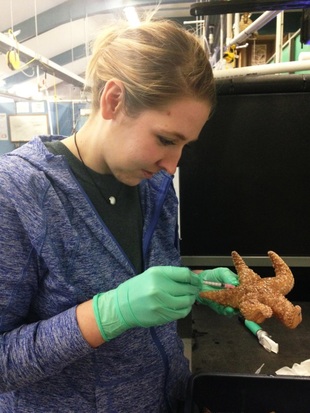
If you’re a sea star on the West Coast between California and Alaska, things aren’t looking good for you. A mysterious condition known as Sea Star Wasting Syndrome is affecting record numbers of sea stars, leaving them weak and susceptible to bacterial infection. The syndrome can cause arm curling, lesions, and eventually death. As the sea stars die, entire arms fall off and their bodies disintegrate.
Actually, this problem is bigger than just sea stars. Some sea stars – like sunflower and ochre stars – are keystone species, meaning that they have a big effect on other species in their ecosystem.
West Coast aquariums with open seawater systems (like Point Defiance Zoo & Aquarium, which pumps filtered water directly from the Puget Sound into aquarium tanks) are working together to learn more about Sea Star Wasting Syndrome and to develop techniques that might save captive populations in the meantime.
At Point Defiance Zoo & Aquarium, Aquarist Melissa Bishop and veterinary staff wanted to see how an antibiotic treatment might affect our populations.
“We lost a significant number of our sea stars,” Melissa said. “So we came up with a plan to see if we could treat some of them.” Aquarists and veterinary staff at the zoo took a collection of sea stars that were showing signs of wasting and housed them in a separate tank where they were medicated with an antibiotic called Trimethoprim Sulfamethoxazole. This particular antibiotic was chosen partially because it treats a wide range of bacterial infections.
The treatment helped. Although an antibiotic does not “cure” sea stars of the syndrome, it appears to knock back the infectious bacteria that are probably causing all the deterioration, allowing the animals to live longer. Some of the sea stars that were starting to lose arms were even able to regrow their limbs. That probably doesn’t happen in wild sea stars affected by the syndrome, Melissa said, because they deteriorate too quickly.
It’s not a permanent solution. “Because we’re an open sea water system, the affected stars start to get better as we do the baths, but when we stop, they deteriorate again,” Melissa explained. However, further research in this area will set the stage for future protocol in how to deal with the syndrome when it hits aquarium populations.
Melissa presented her findings at the 2015 Regional Aquatics Workshop (RAW), where she was awarded a “Best of RAW” award and was invited to present at the 2015 Association of Zoos & Aquariums’ National Conference in September. Congratulations to Melissa, aquarium staff, and veterinary staff for their hard work!
Filed under: Green Tacoma, Parks